

Why This Letter?
Every year, thousands of STEM professionals write letters to 5th-8th grade students through Letters to a Pre-Scientist. Each one is special, but some letters stand out because they do something especially well.
This letter is a great example of a STEM professional’s first letter to their pen pal. As you read, look for the highlighted annotations that explain why these writing choices help students connect with STEM.
Featured STEM Professional
STEM Professional: Theresa Wilsterman
Field: Medicine focused on the brain
Letter Round: 1
Featured Skill: Strategies for ALL students
Before you read, watch for these strategies:
- Uses everyday language
- Defines new vocabulary
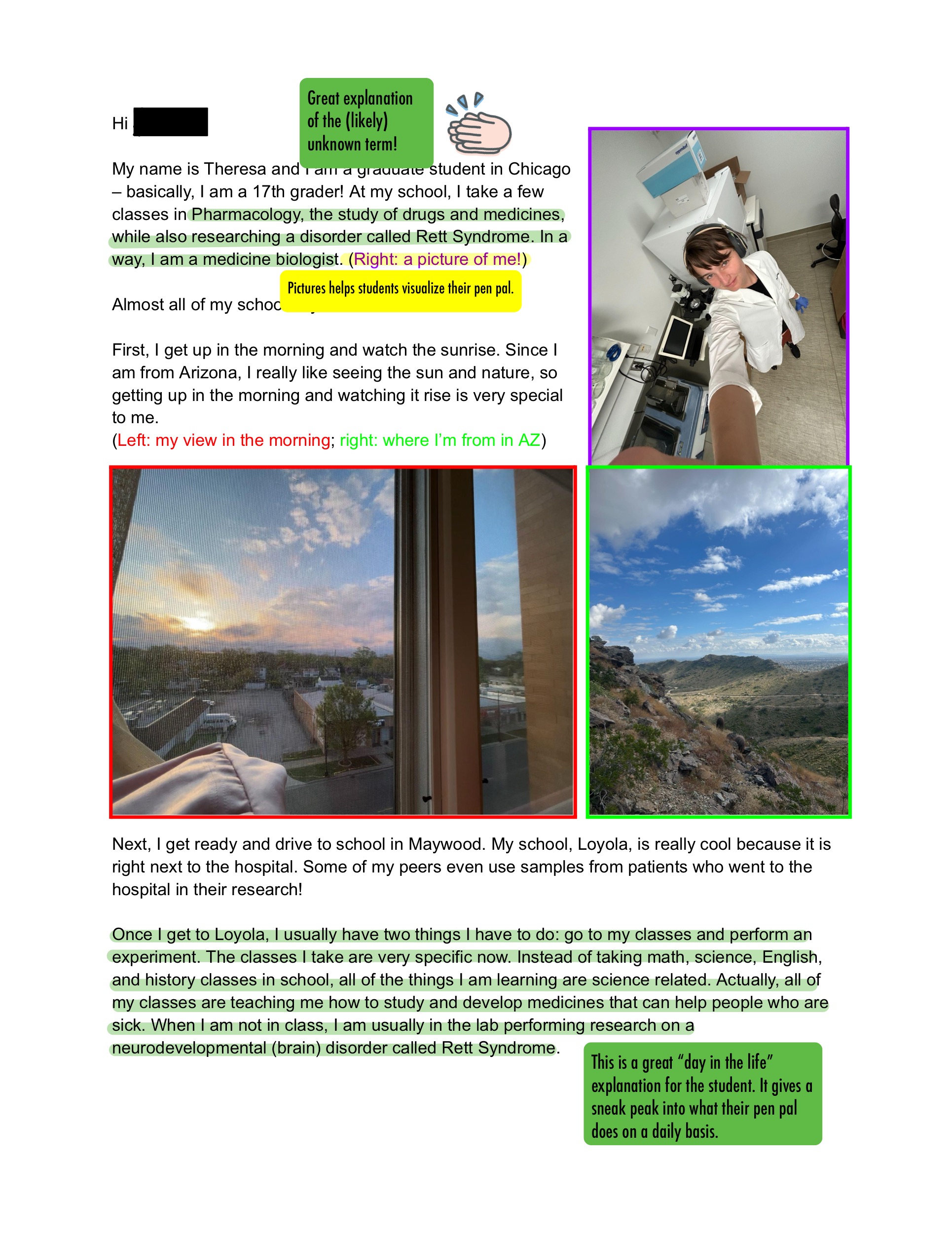
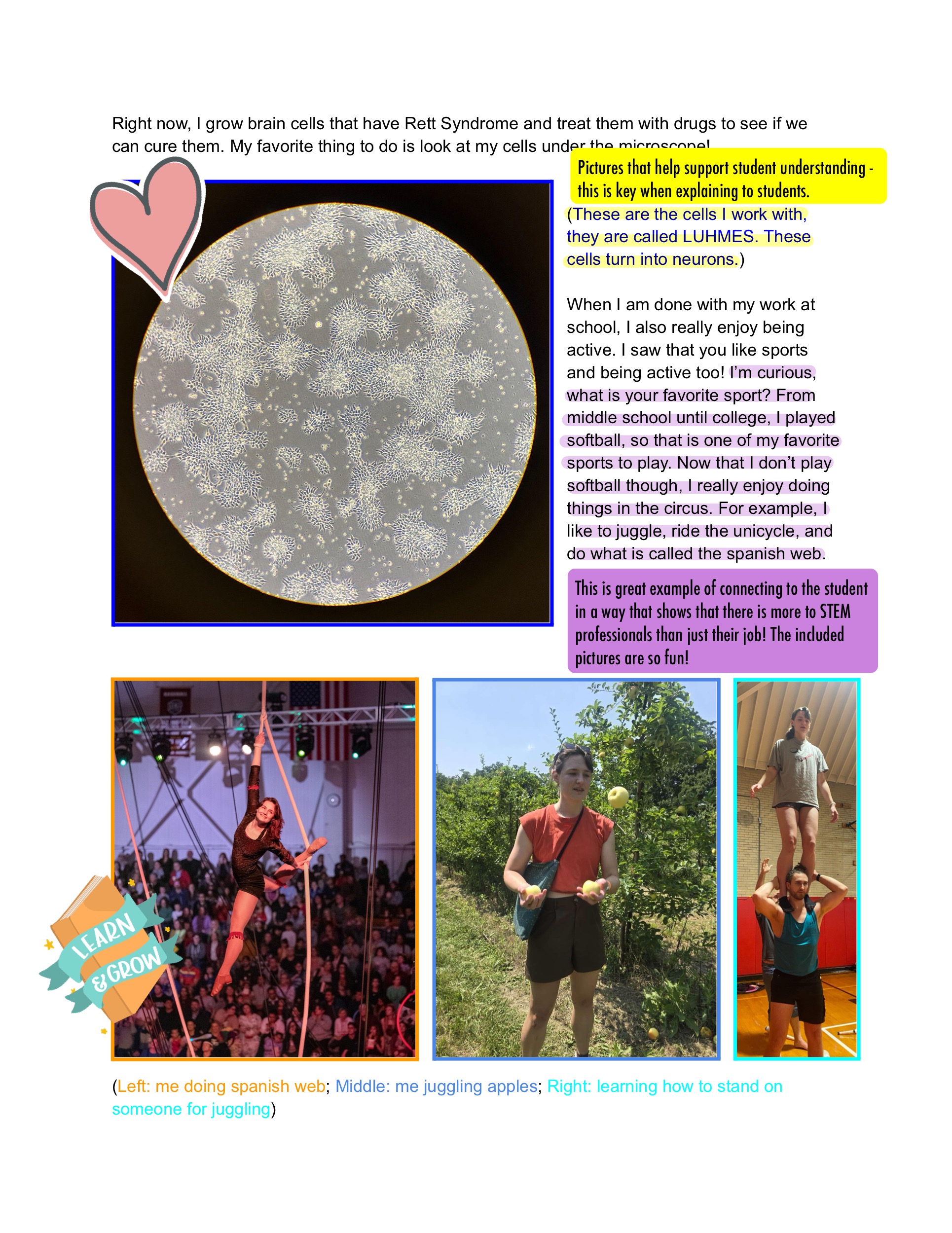
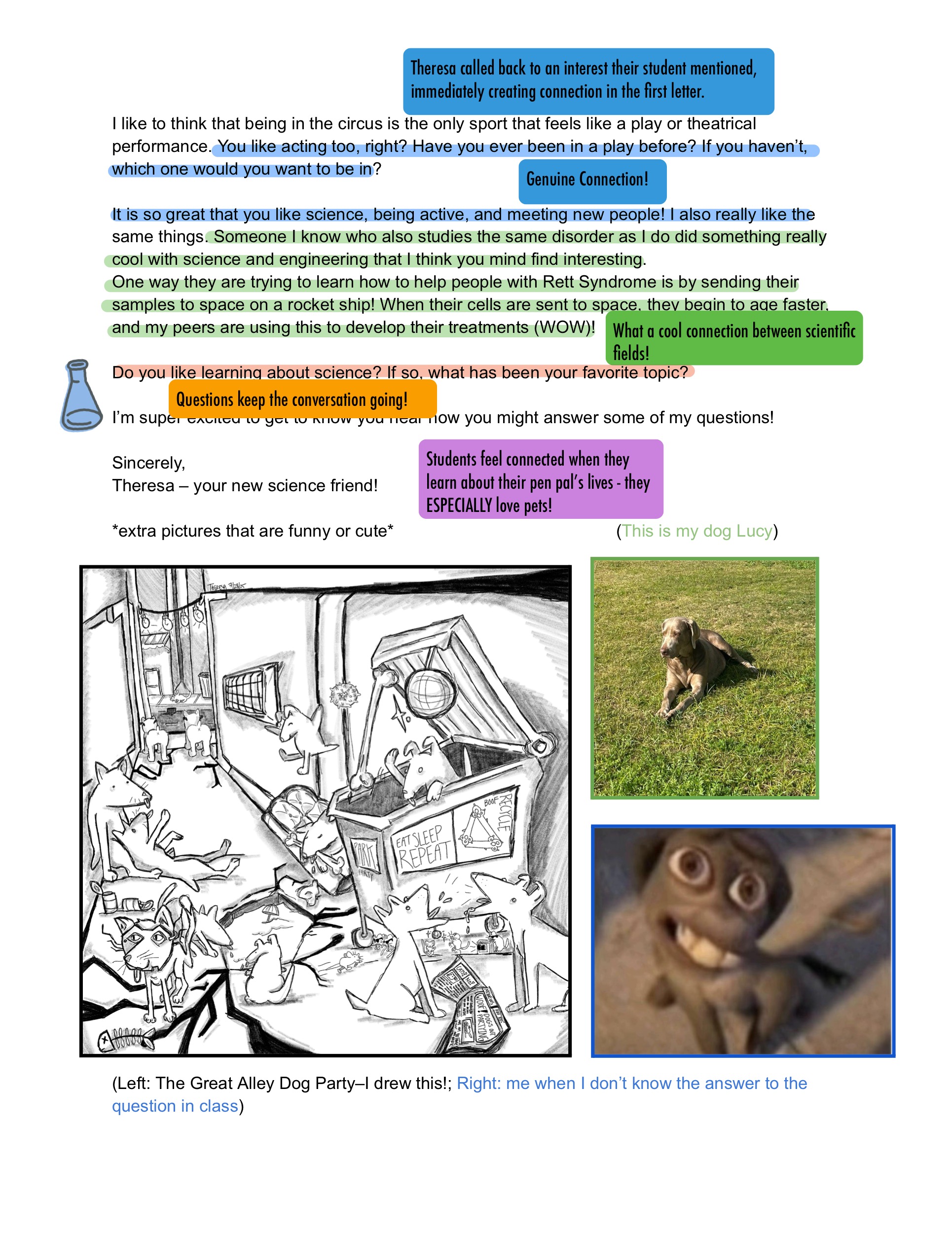
- Includes visuals with captions
- Created connection with the student by relating to student interest in acting
- Includes thoughtful questions for the students to answer
Why We Chose This Letter
Reviewed by: Sarah Malec, 8th Grade Science Teacher, California
This letter was a phenomenal example for a student to get to know their STEM professional. It was easy to read, which is great for some of our lower level readers, and there was interesting information the pen pal shared (especially about their circus talents!) In my experience, this would be a letter a student would share with their class mates as it generates interest and excitement.
Annotated Letter
Big Takeaways
Theresa was not afraid to show her fun side – important for students to see that STEM professionals have fun too! Students find connections with people who are real and relatable.
Blog Annotation Key:
🟦 Student Connection – references to the student’s interests, questions, or previous letters.
🟩 STEM Explained – clear explanations, analogies, or vocabulary support.
🟨 Visual Supports – photos, diagrams, captions, sketches, or formatting that aids understanding.
🟪 Relationship Building – encouragement, empathy, humor, or personal storytelling.
🟧 Curiosity Boosters – questions the pen pal asks that invite students to keep the conversation going.
❤️ Growth & Belonging – stories of perseverance, setbacks, diverse pathways, or reminders that students belong in STEM.


